Sustainable Kitchen Excellence: The Best Sustainable Kitchens United States Guide
The modern kitchen functions as the primary nexus of domestic resource consumption. It serves as the site for energy-intensive appliance use, high-frequency water usage, and the management of both perishable and non-perishable goods. When homeowners initiate a remodel with environmental goals, they often focus on superficial swaps, such as changing hardware or selecting specific paint colors. Best Sustainable Kitchens United States Guide. While these choices hold merit, they fail to address the systemic impact of the kitchen as a long-term asset. A truly responsible kitchen design treats the entire space as a calibrated ecosystem where efficiency, durability, and material integrity dictate every decision.
Moving toward sustainability requires a departure from reactive, single-issue repairs. Robust design involves a comprehensive audit of the building envelope, the lifecycle of chosen materials, and the operational footprint of installed machinery. Professionals must assess heat transfer, waste management, and energy demand using data-driven models rather than simple trend-following. By treating every kitchen upgrade as an investment in the home’s lifecycle, owners can ensure that their improvements provide long-term utility rather than immediate, aesthetic gratification.
This analysis provides a structured methodology for the identification, implementation, and evaluation of high-performance design choices. It moves beyond standard eco-friendly tropes to examine the physics of indoor air quality, the thermal performance of surfaces, and the systemic benefits of circular material flows. By establishing a framework for long-term health, this guide serves as a definitive resource for owners who prioritize the preservation of their capital asset through responsible engineering.
Understanding “best sustainable kitchens united states”
When project owners investigate the best sustainable kitchens united states, they frequently focus on the visible consequences of their choices, such as the wood source or the countertop aesthetic, while ignoring the underlying mechanics of energy and water efficiency. A professional assessment must prioritize the identification of total system demand. In high-stakes environments, the risk involves the loss of long-term efficiency due to poor appliance integration or inadequate ventilation, which forces unnecessary consumption. Common misunderstandings often center on the belief that choosing a renewable material resolves the latent environmental impact of a poorly designed, energy-hungry floor plan. This perspective is flawed. Materials only hold value if the system they inhabit functions with maximum efficiency.
Oversimplification remains a primary threat to structural longevity. Many homeowners incorrectly assume that installing energy-rated appliances provides a comprehensive solution for total energy demand. True expertise involves a systematic inquiry into the building’s thermal envelope, its internal airflow, and the continuity of its utility pathways. Understanding how to navigate this domain requires a deep audit of the kitchen’s thermal load, its exterior exposure, and the compatibility of its components. The goal is a resilient environment where the kitchen functions as a closed-loop system, minimizing waste while maximizing output.
The Problem of Superficial Benchmarking
Evaluating performance based solely on individual product ratings ignores the reality of integrated system stress. Elite practices demonstrate value by utilizing thermal modeling to track the interaction between appliances and the wider home. The most effective professionals act as forensic engineers rather than mere design consultants. They ensure that every component is assessed for its potential impact on the total home energy budget. This approach creates a cohesive environment where the building can safely process daily culinary requirements without sustaining unnecessary environmental penalties.
Contextual Intelligence and Systemic Balance
Elite firms demonstrate intelligence by acknowledging that the building shell interacts with the regional climate. A high-humidity coastal zone requires different ventilation protocols than a dry, interior highland area. A professional consultant must adjust the mitigation strategy to account for these specific environmental conditions. Poor planning here, particularly in the placement of energy-recovery ventilators, can trap humidity inside the wall, leading to rapid decay. The best way to evaluate potential choices is through a rigorous inquiry into the building’s ability to maintain climate-stable interiors while processing the high heat loads of a kitchen.
The Evolution of Domestic Resource Management
The history of residential culinary space in the United States tracks a trajectory from large, unoptimized rooms toward the highly controlled, energy-efficient enclosures of 2026. This evolution mirrors broader shifts in how the home serves as a hub for both thermal efficiency and long-term asset preservation. The transition toward advanced, low-impact materials represents a deeper demand for structures that respond to the modern requirement for extreme energy control, even at the cost of reduced visual indulgence.
From Static Walls to Programmable Environments
The contemporary design process is defined by the requirement for active resource management. Modern kitchen zones are increasingly treated as dynamic architectural systems, designed to manage energy pressure shifts rather than functioning as simple cooking stations. This shift necessitates a high degree of pre-installation precision, where thermal calculations are finalized long before the cabinetry installation phase begins. The modern consultant acts as the primary translator between the high-tech requirements of building physics and the desired visual comfort.
Material Accuracy and Modern Standards
Engineered enclosure systems now incorporate high-density insulation planes as a standard requirement. These materials allow owners to perceive the true resource levels of the structure without the interference of hidden, energy-wasting thermal bridges. By utilizing advanced sensors, designers ensure that preparation areas remain monitored for efficiency. This level of oversight ensures that high-end homes function as calibrated laboratories rather than passive, high-maintenance boxes. Advanced studios emphasize this technical capability to differentiate their work from generic, low-performance kits.
Conceptual Frameworks for Eco-Performance
To effectively vet mitigation plans, property owners must apply mental models that prioritize functional performance and systemic lifespan.
The Lifecycle-Output Duality
This framework evaluates every assembly against its dual requirements. Does it minimize resource entry? Does it promote long-term circularity? The model dictates that performance over time is the threshold condition. If a selection—such as an ultra-high-maintenance stone—cannot be justified by its contribution to a stable internal cycle, it is considered a risk. By treating the ability to remain functional as a non-negotiable asset, this model prevents the error of creating a fragile, unrepairable surface.
The Load-Response Hierarchy
This model classifies enclosure variations by their management type: passive-load, active-control, or high-performance. Each carries distinct operational limits. Passive-load options offer the cheapest install but provide the lowest safety margin. Active-control systems provide immense resilience for complex climates but demand high installation accuracy. Understanding this hierarchy allows the owner to choose the hardware that best matches their volumetric and fiscal requirements.
Taxonomy of Sustainable Variations and Trade-offs
Design partnerships can be categorized by their technical focus and their degree of involvement in the construction phase.
| Service Category | Operational Focus | Primary Trade-off |
| Active Monitoring | Early waste detection | Requires digital hardware |
| Passive Thermal | High-reliability shed rates | Complex exterior insulation |
| Circular Sourcing | Balanced climate adaptation | Sensitive to site location |
| Material Hardening | Decay-resistant framing | Higher initial resource cost |
Realistic Decision Logic
The selection of a design partner is dictated by the complexity of the project and the owner’s operational comfort. If a project involves significant volume, a partnership with a firm experienced in high-performance envelope integration is the most effective strategy. If the goal is a highly specific, custom-engineered aesthetic, a studio with an established network of building scientists often yields the best outcome. The goal remains matching the project’s technical complexity to the system’s core capabilities.
Real-World Scenarios: Discovery, Planning, and Execution Best Sustainable Kitchens United States Guide
Scenario 1: The Ventilation Integration Problem
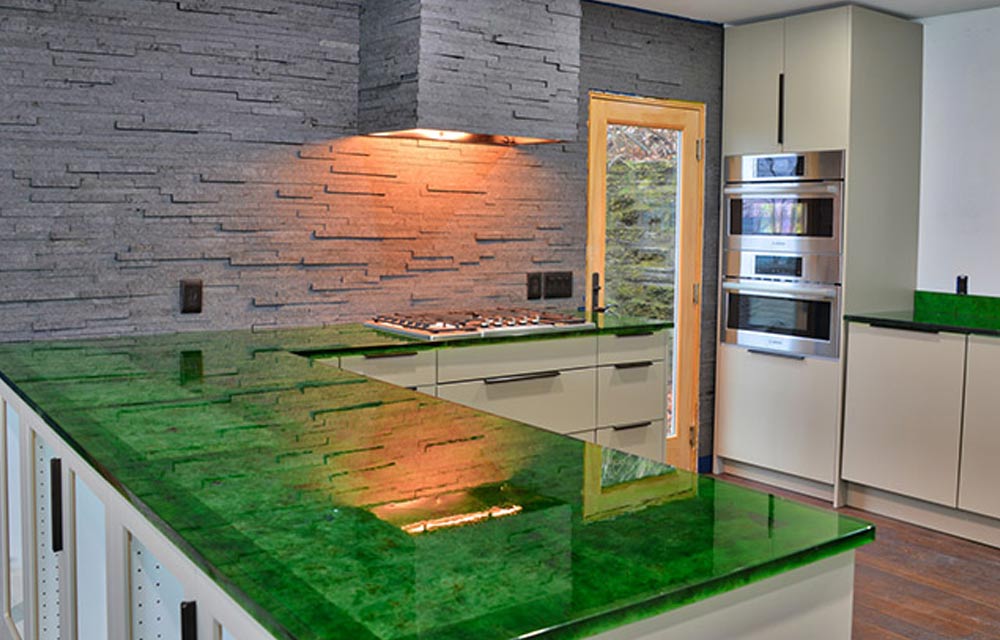
A project requires a complex cooking-to-wall transition. The designer must coordinate with the builder to ensure the hood is installed in a high-velocity, low-leakage sequence. The failure mode involves a “seal error” where internal air escapes to the exterior, creating a pressure trap. The mitigation is a formalized installation checklist, where the designer verifies the ducting sequence against the manufacturer’s manual.
Scenario 2: The Structural Cavity Conflict
During an extensive remodel, the discovery of a load-bearing beam reveals that standard ventilation routing will not fit. The failure mode involves the builder attempting to crush the pipe to force a fit. The decision point requires the designer to pivot the layout, treating the discovery as a design parameter. The elite professional maintains a pre-negotiated budget allowance for such discoveries, preventing construction delays.
Scenario 3: Managing Complex Maintenance Work
High-traffic families often prioritize speed over aesthetic purity. The challenge arises when fixed panels create deep pockets for standing dust. Elite designers implement modular, tilt-out panels to force uniform airflow. This tactical shift improves ventilation rates significantly. The second-order effect of this change is a massive reduction in household air quality issues.
Resource Dynamics, Cost Structures, and Lifecycle Value
The economic reality of high-end design involves prioritizing the “invisible” weatherproofing labor over the visible exterior finishes.
| Resource Category | Cost Driver | Complexity Index |
| Ducting Precision | Engineering reliability | High |
| Envelope Sourcing | Environmental fidelity | High |
| Site Documentation | Planning accuracy | High |
| Exterior Finish | Aesthetic material grade | Moderate |
Investment should follow the utility. Prioritize the time spent in the planning phase. These are the elements that provide the system’s reliability. A reduction in luxury-grade decorative metalwork to accommodate a more thorough, engineering-heavy planning phase is almost always a superior strategy for maintaining the project’s value.
Tools, Strategies, and Support Systems
The successful specification of a project relies on a range of analytical tools utilized by the professional:
-
Thermodynamic Mapping: Creating a digital 3D model of the site to identify intensity distribution before finalizing plans.
-
Integrated Submittal Logs: Maintaining a centralized, date-stamped record of all moisture-sensitive material specifications.
-
Phased Site Verification: Conducting critical-point inspections during the construction phase to ensure the build aligns with the performance specs.
-
Component-Level Degradation Audits: Calculating the performance requirements of every connection to ensure consistency across the entire residence.
The Risk Landscape: Identifying Compounding Failures
The failure of a modern enclosure system is rarely a sudden event. It is the accumulation of systemic oversights that occur in the design phase.
-
Dimensional Mismatch: Occurring when ducting dimensions do not match the wall plenum, leading to costly and invasive site modifications.
-
The “Invisible” Thermal Conflict: Common in high-end projects where excessive interior humidity is placed against a cold exterior, leading to localized condensation.
-
Adhesive Incompatibility: The cumulative effect of choosing high-fidelity tapes that do not communicate properly with the building’s existing surface finishes.
Governance, Maintenance, and Long-Term Adaptation
A high-functioning environment is a technical asset that requires formal management.
Establishing Maintenance Protocols
-
Periodic Integrity Checks: Measuring air-sealing levels annually accounts for normal building settling over time.
-
Sealant Validation: Inspecting mechanical barriers and edge connections for signs of excess wear or material degradation every 24 months.
-
Adjustment Triggers: Establishing clear thresholds for mechanical function, such as when pressure-boundary performance drops below the design baseline, requiring immediate resealing.
A layered maintenance checklist should be provided to the owner upon completion. This ensures that the system’s performance is monitored and preserved over the long term.
Measurement, Performance Signals, and Analytical Evaluation
Success in modern design is measured by the silence and reliability of the operation.
-
Leading Indicators: The ease of interaction during daily use, the complete absence of stains or rot, and the perfect alignment of every exhaust path.
-
Lagging Indicators: The total lack of service-related repairs, and the longevity of the moisture-barrier modules and control drivers.
-
Qualitative Signals: The subjective sense of a responsive space, where the layout supports intended workflows without air-pressure issues.
Documentation should include the structural load calculations, the ducting map, and a detailed schedule of all components for future reference.
Industry Misconceptions and Structural Oversimplifications
-
The “High-Seal” Fallacy: The belief that more airtightness is always better. Over-sealing often kills the moisture-escape potential and creates air-pressure issues.
-
Extraction Over-Optimization: Attempting to hide every single component often leads to a room that feels “flat” and devoid of necessary visual texture.
-
The “Sealant-Fixes-All” Myth: Sealant is useful but cannot fix a fundamentally flawed, porous material choice.
-
Hardware Neglect: Viewing silencers and drivers as secondary. In high-performance systems, the mechanical control elements are the primary determinants of the user experience.
Strategic Synthesis and Future Engineering Pathways
Selecting the elite path for your next home project is fundamentally a balancing act between structural rigor, electrical efficiency, and atmospheric clarity. By prioritizing the invisible, utility-based requirements of the environment, homeowners create a foundational asset that supports the evolving needs of their lives. The future of the domestic hub lies in the integration of even more sophisticated, concealed sensors and the use of air handlers that combine extreme performance with refined spectral output. Those who approach the culinary environment as a complex architectural problem rather than an aesthetic accessory achieve the highest degree of long-term utility, ensuring their homes remain high-performance environments for generations.