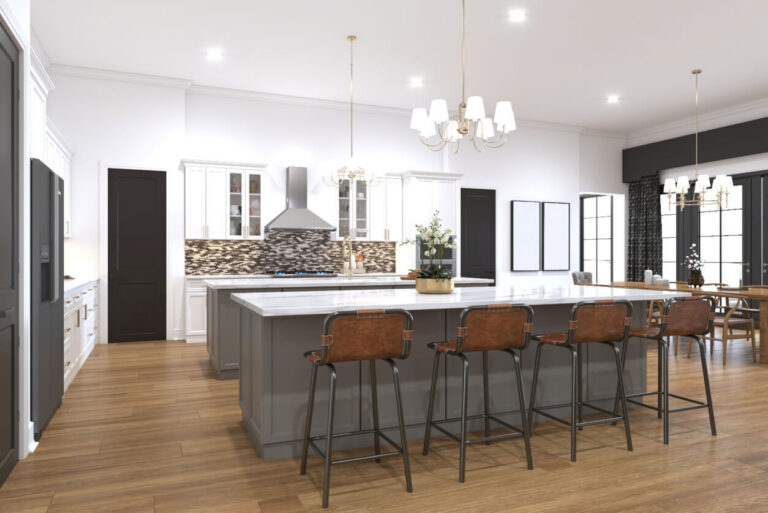
Flooring Integrity: Avoiding Common Kitchen Flooring Installation Mistakes
The kitchen floor serves as the primary load-bearing horizontal plane within a residential structure. It experiences constant traffic, frequent liquid exposure, and significant thermal fluctuations. Common Kitchen Flooring Installation Mistakes. When owners plan an installation, they often focus exclusively on the visible material. This narrow perspective overlooks the critical reality that a floor system is only as reliable as its subfloor foundation. Failure at the base inevitably propagates through the finished layer, causing cracks, gaps, or adhesive detachment.
Professional mastery in flooring requires a deep understanding of moisture migration and structural deflection. A slab that remains perpetually damp due to inadequate vapor control will destroy even the most expensive tile or hardwood. Similarly, a subfloor that lacks the necessary stiffness will lead to stress fractures in rigid materials. These systemic issues represent the difference between a high-performance, long-term asset and a temporary surface that requires frequent, costly intervention.
This article provides a rigorous, technical examination of the installation process. It moves beyond common, surface-level advice to explore the engineering logic that governs successful material integration. By framing flooring as a component of the building’s broader mechanical system, this manual serves as a definitive resource for property owners seeking to minimize risk through precise preparation and informed execution.
Understanding “common kitchen flooring installation mistakes”
When homeowners evaluate common kitchen flooring installation mistakes, they frequently overlook the hidden physics of the subfloor. A superior installation is defined by the absolute flatness and dryness of the underlying structure. Many individuals believe that a thin leveling compound can mask significant unevenness. This assumption is inaccurate. Substantial deflection or unevenness requires structural remediation, not just cosmetic smoothing. Without a solid foundation, the finish layer will eventually experience mechanical stress, leading to failures that are both difficult and expensive to rectify.
Oversimplification remains a primary threat to surface integrity. Many projects suffer from “moisture-blindness,” where the installer fails to test the vapor emission rate of a concrete slab before applying an adhesive. True expertise involves the systematic audit of every environmental parameter prior to starting the work. Understanding how to navigate this domain requires a deep inquiry into the manufacturer’s technical specifications, the local climate’s humidity impact, and the compatibility of the chosen sealants. The goal is a seamless, stable interface that persists for the lifetime of the home.
The Problem of Surface-Level Benchmarking
Evaluating flooring choices based solely on aesthetic appeal ignores the primary indicator of success: the ability to handle localized moisture. Elite design work demonstrates value through the technical consistency of the underlayment. The most effective professionals act as materials scientists rather than aesthetic curators. They ensure that every layer functions within a predictable, low-maintenance system. This approach creates a cohesive environment where the materials remain stable without the need for constant, invasive adjustments.
Contextual Intelligence and Systemic Balance
Elite practices demonstrate intelligence by acknowledging that the flooring interacts with the home’s broader mechanical climate. High-traffic culinary environments require different performance thresholds than secondary rooms. A professional consultant must adjust the selection density to account for these inherent spatial properties. Poor planning here, particularly in the placement of transitions relative to high-moisture sink zones, can result in irreparable degradation. The best way to evaluate potential choices is through a rigorous inquiry into the material’s diffusion properties and its integration with the room’s structural layout.
The Evolution of Domestic Surface Engineering
The history of residential flooring in the United States tracks a trajectory from traditional, porous stone and wood toward the hyper-integrated, high-fidelity engineered platforms of 2026. This evolution mirrors broader shifts in how the home serves as a hub for both precision work and communal gathering. The transition toward high-density, low-porosity surfaces represents a deeper demand for domestic spaces that respond to the reality of modern, high-traffic living.
From Static Slabs to Programmable Systems
The contemporary design process is defined by the requirement for “active utility.” Modern floors are increasingly treated as architectural components, designed to vanish into the room’s rhythm rather than functioning as objects of attention. This shift necessitates a high degree of pre-installation precision, where moisture levels, thermal conductivity, and chemical stability are finalized long before the slab is laid. The modern consultant acts as the primary translator between the requirements of high-tech fabrication and the desired visual calmness.
Conceptual Frameworks for Professional Evaluation
To effectively vet flooring hardware, property owners must apply mental models that prioritize performance and system longevity.
The Stability-Flexibility Duality
This framework evaluates every surface against its dual requirements. Does it solve a specific functional challenge? Does it contribute to the overall environmental success of the home? The model dictates that performance is the threshold condition. If a selection—such as a soft, decorative composite—cannot be justified by its contribution to the floor’s durability, it is considered a vanity element. By treating performance as a non-negotiable, this model prevents the error of specifying hardware that interferes with daily tasks.
The Substrate-Finish Hierarchy
This model classifies hardware by its density and composition: natural igneous, sintered ceramics, and high-performance resins. Each carries distinct operational limits. Natural stone offers a proven, 50-year track record but requires significant preparation. Engineered ceramics provide immense heat resistance but demand precise installation. Understanding this hierarchy allows the owner to choose the material that best matches their specific volumetric requirements.
The Surface Lifecycle Assessment
This framework requires evaluating the proposal against a 20-year usage horizon. The model forces the client and professional to ask a specific question: How will this surface maintain its output quality over time? By forcing this forward-looking perspective, the model discourages choices that rely on disposable, non-repairable materials, instead favoring systems with natural stability and standard cleaning protocols.
Taxonomy of Surface Categories and Performance
Design partnerships can be categorized by their technical focus and their degree of involvement in the construction phase.
| Service Category | Operational Focus | Primary Trade-off |
| Natural Igneous | Long-term structural lifespan | Heavy extraction requirement |
| Sintered Ceramics | Extreme thermal stability | Complex, precise installation |
| High-Density Paper | Warm, tactile finish | Moderate stain sensitivity |
| Recycled Aggregates | Waste redirection potential | Variable binder durability |
Realistic Decision Logic
The selection of a design partner is dictated by the complexity of the project and the owner’s operational comfort. If a project involves significant volume, a partnership with a firm experienced in high-performance integration is the most effective strategy. If the goal is a highly specific, custom-engineered aesthetic, a studio with an established network of stone fabricators often yields the best outcome. The goal remains matching the project’s technical complexity to the system’s core capabilities.
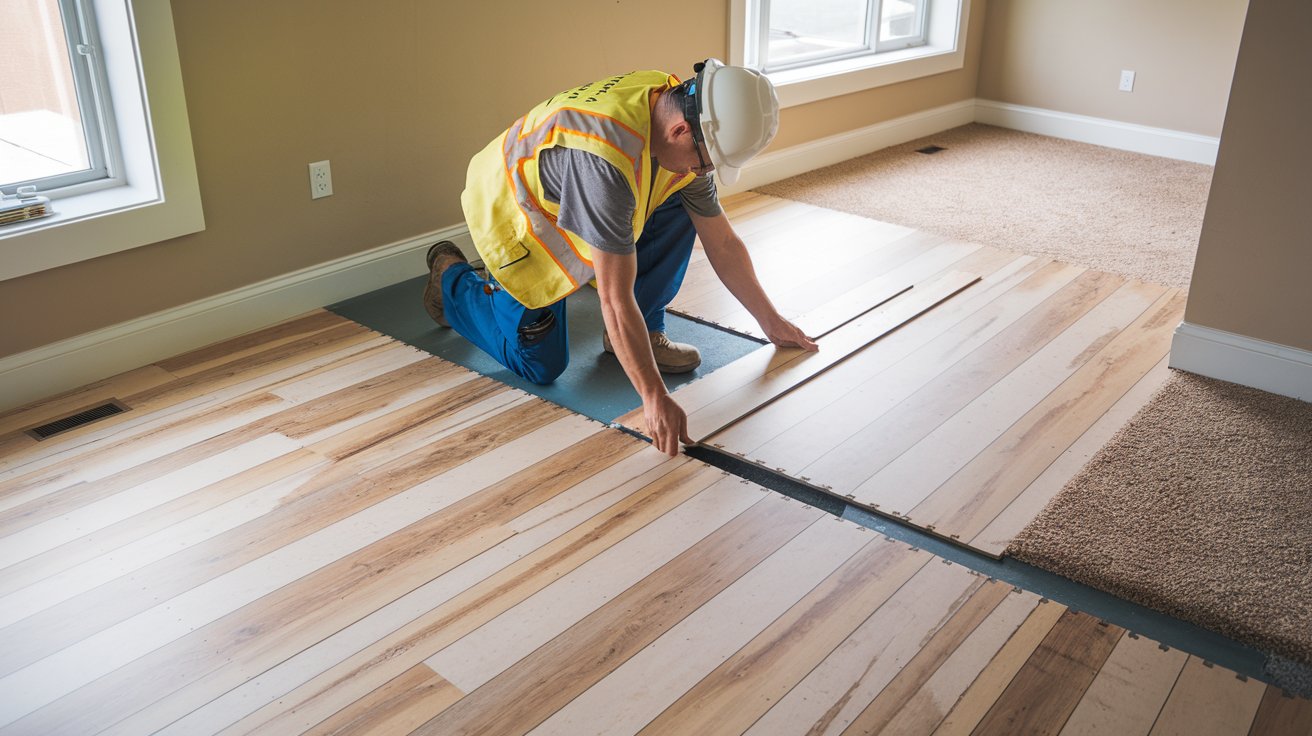
Real-World Scenarios: Discovery, Planning, and Execution Common Kitchen Flooring Installation Mistakes
Scenario 1: The Moisture Barrier Problem
A project requires high-performance, thin-profile flooring above a concrete basement slab. The designer must coordinate with the builder to ensure the material includes a moisture barrier. The failure mode involves a positioning error where supports are spaced too far apart, causing cracks. The mitigation is a formalized structural simulation, where the designer verifies the slab’s span against the frame geometry.
Scenario 2: The Structural Slab Conflict
During an extensive remodel, the discovery of a structural beam reveals that standard heavy stone tiles will not fit in the desired layout. The failure mode involves the builder attempting to install the heavy pieces into the restricted cavity. The decision point requires the designer to pivot the layout, treating the discovery as a design parameter. The elite professional maintains a pre-negotiated budget allowance for such discoveries, preventing construction delays.
Scenario 3: Managing Complex Task Work
High-traffic families often prioritize speed over aesthetic purity. The challenge arises when fixed surfaces create deep stains for rapid prep. Elite designers implement high-density sintered tiles to force uniform stain resistance. This tactical shift improves rotation rates significantly. The second-order effect of this change is a reduction in household maintenance efforts.
Scenario 4: The Sealant Compatibility Crisis
Modern smart-cleaning systems often struggle with non-standard tile sealants. A standard surface may haze when connected to a digital cleaning system. Designers must pre-test every component for sealant compatibility. These investigations are tedious but essential for long-term satisfaction. Failure to check compatibility leads to persistent, surface instability.
Resource Dynamics, Cost Structures, and Lifecycle Value
The economic reality of high-end design involves prioritizing the “invisible” fabrication labor over the visible floor surface.
| Resource Category | Cost Driver | Complexity Index |
| Fabrication Precision | Engineering reliability | High |
| Material Sourcing | Environmental fidelity | High |
| Site Documentation | Planning accuracy | High |
| Surface Finish | Aesthetic material grade | Moderate |
Investment should follow the utility. Prioritize the time spent in the planning phase. These are the elements that provide the system’s reliability. A reduction in luxury-grade decorative edge work to accommodate a more thorough, engineering-heavy planning phase is almost always a superior strategy for maintaining the project’s value.
Tools, Strategies, and Support Systems
The successful specification of a project relies on a range of analytical tools utilized by the professional:
-
Thermal Mapping: Creating a digital 3D model of the site to identify intensity distribution before finalizing plans.
-
Integrated Submittal Logs: Maintaining a centralized, date-stamped record of all slab, adhesive, and sealant specifications.
-
Phased Site Verification: Conducting critical-point inspections during the construction phase to ensure the build aligns with the performance specs.
-
Component-Level Wear Audits: Calculating the performance requirements of every material to ensure consistency across the entire work environment.
The Risk Landscape: Identifying Compounding Failures
The failure of a modern surface system is rarely a sudden event. It is the accumulation of systemic oversights that occur in the design phase.
-
Dimensional Mismatch: Occurring when tile dimensions do not match the room plenum, leading to costly and invasive site modifications.
-
The “Invisible” Thermal Conflict: Common in high-end projects where excessive heat is placed onto cold stone, leading to localized stress fractures.
-
Sealant Incompatibility: The cumulative effect of choosing high-fidelity surfaces that do not communicate properly with the building’s existing cleaning protocols.
Governance, Maintenance, and Long-Term Adaptation
A high-functioning kitchen is a technical asset that requires formal management.
Establishing Maintenance Protocols
-
Periodic Integrity Checks: Measuring surface levels annually accounts for normal building settling over time.
-
Sealant Validation: Inspecting chemical barriers and edge connections for signs of excess wear or material degradation every 24 months.
-
Adjustment Triggers: Establishing clear thresholds for mechanical function, such as when stain resistance drops below the design baseline, requiring immediate resealing.
A layered maintenance checklist should be provided to the owner upon completion. This ensures that the system’s performance is monitored and preserved over the long term.
Measurement, Performance Signals, and Analytical Evaluation
Success in modern design is measured by the silence and reliability of the operation.
-
Leading Indicators: The ease of interaction during daily use, the complete absence of stains or chips, and the perfect alignment of every edge.
-
Lagging Indicators: The total lack of service-related repairs, and the longevity of the slab modules and sealants.
-
Qualitative Signals: The subjective sense of a responsive space, where the layout supports intended workflows without visual noise.
Documentation should include the material load calculations, the seam map, and a detailed schedule of all components for future reference.
Industry Misconceptions and Structural Oversimplifications
-
The “High-Recycled” Fallacy: The belief that more recycled content is always better. Heavy binders often kill the environmental benefit and create structural weakness.
-
Surface Over-Optimization: Attempting to hide every single seam often leads to a room that feels flat and devoid of necessary visual texture.
-
The “Sealant-Fixes-All” Myth: Sealant is useful but cannot fix a fundamentally flawed, porous material choice.
-
Fabrication Neglect: Viewing templates and edge detailing as secondary. In high-performance systems, the mechanical control elements are the primary determinants of the user experience.
Strategic Synthesis and Future Engineering Pathways
Selecting the elite path for your next home project is fundamentally a balancing act between structural rigor, material efficiency, and visual clarity. By prioritizing the invisible, utility-based requirements of the environment, homeowners create a foundational asset that supports the evolving needs of their lives. The future of the domestic hub lies in the integration of even more sophisticated, sustainable resins and the use of natural surfaces that combine extreme performance with refined geological output. Those who approach the culinary environment as a complex architectural problem rather than an aesthetic accessory achieve the highest degree of long-term utility, ensuring their homes remain high-performance environments for generations.